
The Hidden Hack to Peak Performance

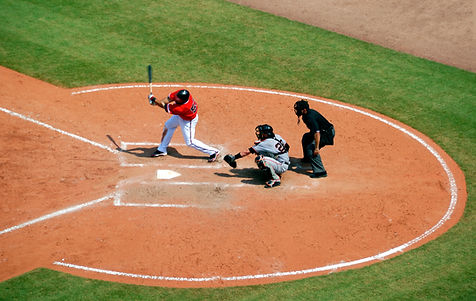
At a recent college baseball game, I watched a scene play out that happens on every youth field in America. A player struck out, and from the stands, his father barked the age-old advice, “You’ve got to focus on the ball!”
The athlete looked straight at his dad and chirped back, “That’s not the problem!”
He was right. When young athletes struggle, parents and coaches instinctively point to mechanics or effort. They scream for the player to "try harder" or "swing the bat," as if elite performance were as simple as a flick of a switch. We even hear "armchair quarterbacks" yelling at perennial all-stars to do better as if the game were that easy.

But elite performers understand a deeper truth: Peak performance builds on state regulation. When the nervous system is dysregulated, even the most refined skills become difficult to access. However, when the body and brain are regulated, trained skills emerge naturally. To bridge the gap between panic and performance, the best in the world rely on three surprisingly simple pillars: Breathe, Vision, and Balance.
Breathe: The Remote Control for Your Brain
Watch an elite athlete seconds before a critical moment, and you will notice something subtle: they take a breath. This isn't just a sigh of relief; it’s a tactical reset.
Before stepping onto the starting blocks, Olympic legend Michael Phelps followed a rigid pre-race ritual. He didn't just visualize the lane; he slowed his breathing to a precise rhythm. These weren't random inhales—they were a deliberate "hack" to steady his nervous system before an explosive performance.

Breathing is the fastest way to manually override your body’s stress response.
The Runner’s Cadence: Distance runners often find this flow naturally, syncing their breath to their stride to stabilize oxygen delivery and lock in mental focus.
The Tactical Edge: Outside of sports, U.S. Navy SEALs use Box Breathing to maintain composure in high-stakes environments.
The principle: Elite performers use their breathe to calm their nervous system.
Vision: The Laser in the Chaos
If breathing regulates the engine, vision directs the aim. Elite vision is an active, aggressive skill. It is the difference between reacting to the game and dictating it.
Research on the “Quiet Eye” effect shows that top-tier athletes—from archers to basketball players—maintain a longer, steadier gaze on their target just before executing a skill. This focused gaze stabilizes the brain’s motor system and improves accuracy under pressure.
Vision also happens behind the eyelids. Elite performers use visualization to enhance their preparation.
· Novak Djokovic mentally rehearsing rallies before they happen.
· Ted Williams turned vision into a science, famously dividing the strike zone into 77 individual squares. Combined with his legendary 20/10 eyesight, he didn't just see a pitch—he saw a grid and used it to be the last player to hit over 400.
The Principle: Elite athletes don’t just react to what they see; they train their eyes to filter through the noise and focus on their target.
Balance: The Foundation of Power
Balance is the chassis of the athletic machine. Without a stable base, even the most elite skills crumble.
Watch Stephen Curry navigate a chaotic defensive screen. Even when twisting mid-air, he finds his center a split-second before the release. Similarly, Derek Jeter famously anchored his swing in a stable, balanced position, knowing that "if you lose your balance, you lose the swing."
Nowhere is this more visceral than in gymnastics. When Simone Biles experienced the "twisties," it wasn't a lack of toughness; it was a total breakdown of spatial awareness—her body’s internal GPS lost its signal. These examples remind us that even the most skilled athletes cannot perform effectively when the body becomes unstable.
The Principle: These examples remind us that even the most skilled athletes cannot perform effectively when the body is unstable.
The Takeaway
The nervous system is the gatekeeper of performance. What often looks like a lack of discipline, effort, or "toughness" is usually just a nervous system that has become unstable or drifted out of balance.
By learning to regulate their internal state through Breathe, Vision, and Balance, athletes at every level can unlock the talent they’ve worked so hard to build. Regulate the state, and the skill will follow.
Interested in Developing a Peak Mindset?
Peak performance isn’t just about physical training. It also involves learning how to regulate the mind and body under pressure. If you’re a parent, coach, or athlete interested in developing these skills, training is available through Peak Mindset Performance. Reach out to Dr. Geoff Weckel to learn
how athletes can access their best when it matters most.


Comments